
Nature-Based
Waldorf Inspired
At Gaia, our educational approach is inspired by many of the strengths of Waldorf education, while remaining grounded in a practical, contemporary, and nature-based learning environment. We focus on the developmental needs of children at each stage of growth and design learning experiences that engage the whole child—intellectually, physically, socially, and creatively. Strong academic foundations in literacy, mathematics, science, and history are built through hands-on projects, storytelling, movement, artistic expression, gardening, and practical crafts, often taking place outdoors and in close relationship with the surrounding landscape.
Our campus and local environment play an important role in learning. Students regularly explore the forest, observe local ecosystems, work in gardens, and experience the rhythms of the seasons. This approach reflects a broader philosophy sometimes called nature-based or “green school” education, where the natural world becomes an essential classroom and a source of curiosity, responsibility, and wonder. By connecting academic subjects with real-world experiences, students develop not only knowledge but also ecological awareness, creativity, and problem-solving skills.
Being Waldorf-inspired at Gaia means drawing on the strengths of that tradition—developmentally appropriate learning, the integration of arts and academics, and an emphasis on imagination and creativity—while adapting the approach to our bilingual environment, multicultural community, and the realities of life on the Nicoya Peninsula. The result is a calm, grounded learning culture that values simplicity, respect, and connection, helping children grow into confident, capable, and socially responsible young people.
Where head, heart,
and hands develop in balance
HEAD
Thinking with
clarity and depth
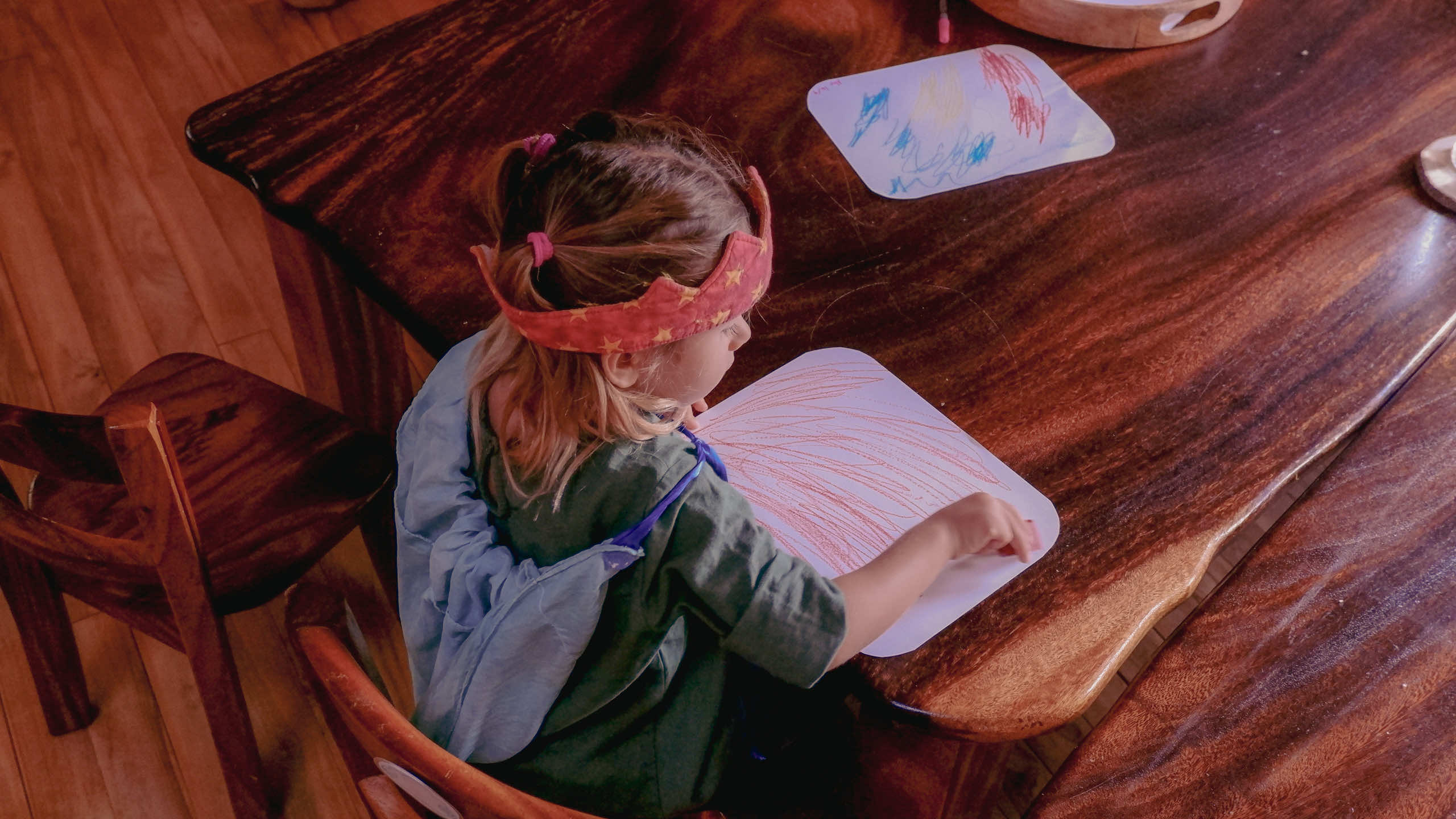
Intellectual development is cultivated with time and continuity. Through block learning, close observation, and sustained academic work, students learn to concentrate, question, and form independent judgment. Knowledge is not rushed. It is explored, connected, and understood with intention.
HEART
Growing
in relationship
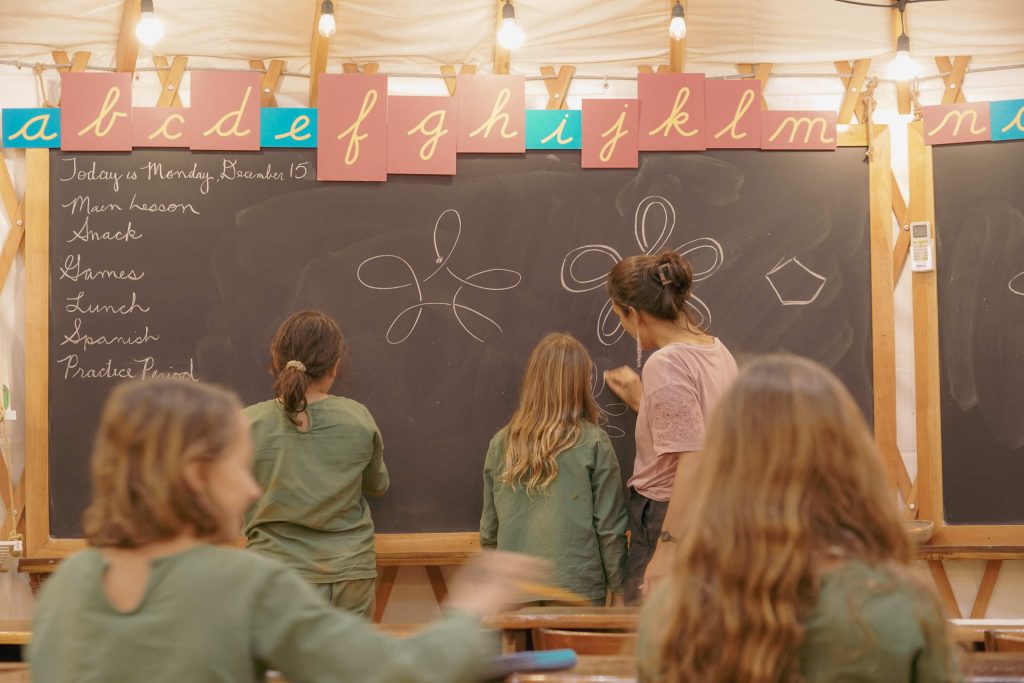
Education happens in community. Daily interaction with teachers and peers builds trust, empathy, and a sense of responsibility toward others. Emotional development is not separate from learning — it shapes how students engage with the world around them.
HANDS
Learning through experience
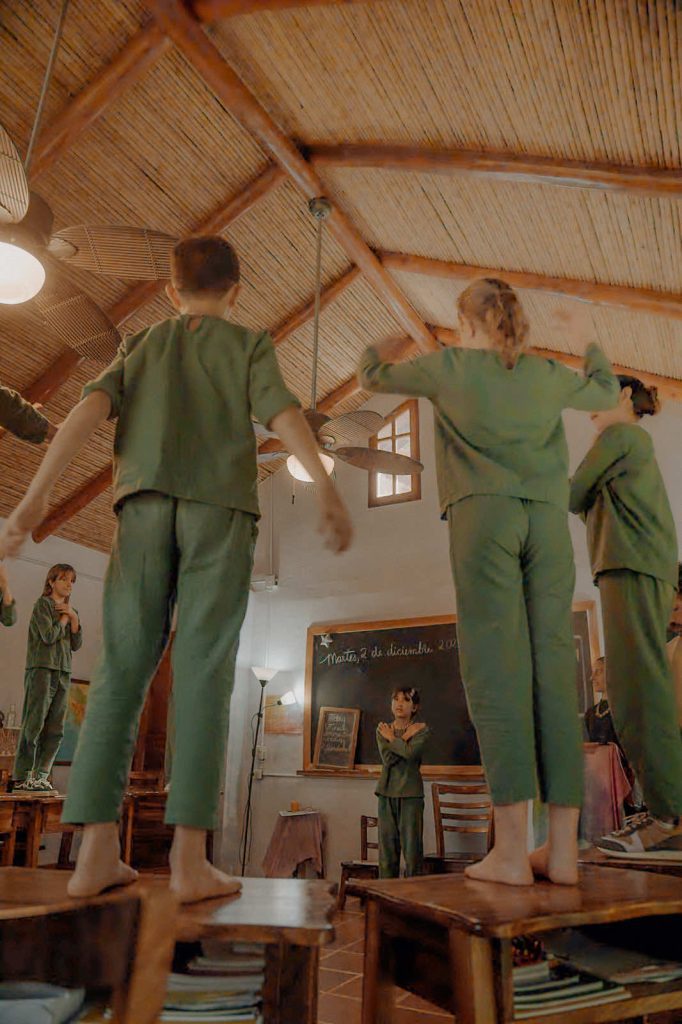
Understanding deepens when it is lived. Artistic work, movement, practical projects, and time in nature allow students to integrate knowledge through direct experience. When the hands are engaged, learning becomes grounded and lasting.
Academic Program
Learning at Gaia is designed to meet the child’s developmental stage while building strong academic skills over time through a Waldorf-inspired approach. Understanding is developed through depth, repetition, and experience, so students don’t simply cover topics, they truly absorb them through thinking, creating, and practicing.
This is why our core academic learning is taught through Main Lesson blocks, where students stay with a subject long enough to form meaningful connections through storytelling, discussion, writing, drawing, and careful practice. Our daily and weekly rhythm further supports this process, balancing focused academic work with dedicated classes such as Gardening, Handwork, Music, and Movement, so learning is strengthened through hands-on experience, movement, and artistic work. As students mature, this approach naturally grows into more analytical thinking and independence—without losing creativity and purpose.
Is a time when daily activities unfold in an unhurried, natural way, following a consistent rhythm and routine.
Includes Grades 1 through 5, a stage of childhood where learning deepens and strong academic foundations are formed.
Includes Grades 6 through 8, a developmental stage where students stand at the threshold of adolescence.
In the early stages of strategic planning for what will become our High School program.
School Schedule
Monday to Thursday
From 08:30 am to 03:00 pm
Friday
From 08:30 am to 12:30 pm
School Calendar 2026–2027
Aug 6 | Administrative team returns
Aug 10 | Teachers return
Aug 24 | First day of school for 2nd–8th Grade
Aug 24/25 | Orientation for Pre-K–1st Grade
Aug 26 | First day of school for Pre-K–1st Grade
Sep 15 | Independence Day (No School)
Oct 19–23 | Fall Break
Nov 26–27 | Thanksgiving Break
Dec 1 | Abolition Day (No School)
Dec 14 – January 5 | Christmas Break
Jan 4 | Teachers, admin & staff return
Jan 6 | Students return
Feb 15–19 | Professional Development Week (No School for Students)
March 22 – April 2 | Easter Break
Jun 18 | Last day of school for students
Jun 23 | Last day for teachers & admin (School closes)